What Happens When You Over-Process Hair Color
Over-processed hair color causes breakage, banding, and unhappy clients. Learn the science behind processing damage and how to prevent it every time.
We've all had that moment.
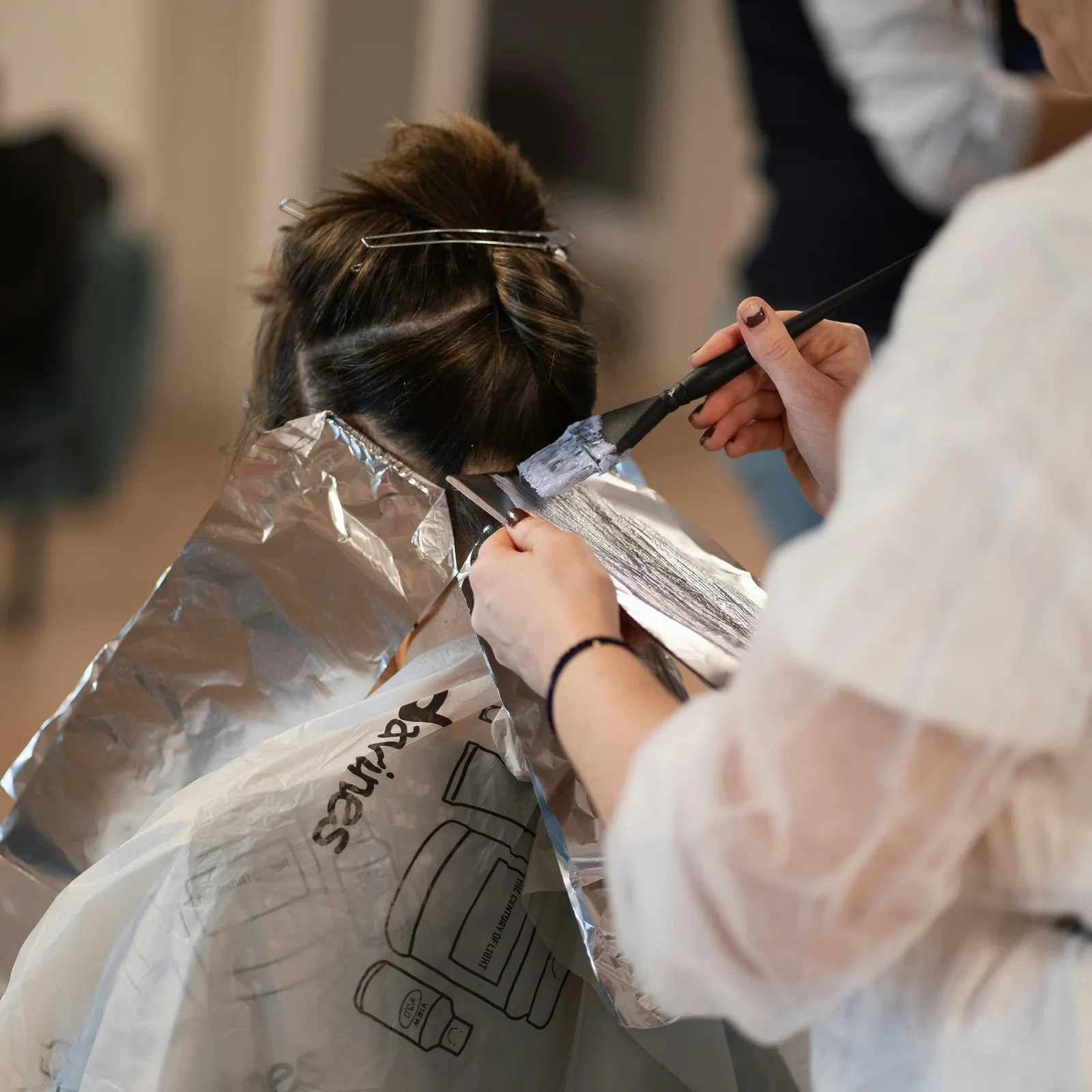
You're juggling three clients, the phone won't stop ringing, and suddenly you realize the foils on chair two have been sitting for way too long. Your stomach drops.
Over-processed hair color is one of the fastest ways to damage your client's hair—and your reputation. Yet it happens constantly, even to experienced colorists, because salon life is chaos and timing is easy to lose track of.
This article breaks down exactly what happens to hair when it's over-processed, why those extra minutes matter more than you think, and practical strategies to make sure it never happens to you again.
The Chemistry of Over-Processing
To understand why over-processing is so damaging, you need to know what's actually happening inside the hair shaft during color application.
When you mix color with developer, you create an oxidizing mixture. The developer's job is to open the cuticle, allowing color molecules to penetrate the cortex. Simultaneously, if you're lifting, the developer breaks down the hair's natural melanin.
This chemical reaction doesn't have a gentle off-switch.
The longer the mixture sits on hair, the more it continues working—opening the cuticle further, breaking down more protein bonds, and compromising the hair's structural integrity.
What Happens Minute by Minute
Here's the uncomfortable truth about processing time:
⏱️ Minutes 1-20 (typical processing window)
The cuticle opens, color deposits, lift occurs as intended. The hair's disulfide bonds remain largely intact.
⚠️ Minutes 25-35 (the danger zone)
Cuticles are now fully raised and beginning to sustain damage. Protein loss accelerates. The hair starts losing elasticity.
🚨 Minutes 40+ (damage territory)
Significant protein degradation occurs. The cuticle may become permanently roughened. In lightening services, the cortex itself starts breaking down.
The scary part? You can't always see this damage immediately. Hair might look fine when you rinse, but the structural compromise shows up later as breakage, color fade, or inability to hold future services.
The Real-World Consequences
Over-processing doesn't just affect the hair—it affects everything connected to that hair.
Client Trust Erosion
Your client came in for a color refresh, not a chemistry experiment gone wrong.
Even if you manage to salvage the result, they felt their hair change texture under your hands. They noticed it didn't feel the same during the rinse. That seed of doubt is planted.
Clients talk. One over-processing incident can cost you referrals for months.
The Redo Trap
Over-processed color often equals uneven color. Maybe the mid-lengths lifted more than the roots. Maybe the ends went brassy because the damaged cuticle couldn't hold the toner properly.
Now you're doing corrective work for free, using more product, losing the time slot you needed for a paying client.
One timing mistake just cost you two appointments worth of profit.
Cumulative Damage
Here's what many colorists don't fully appreciate: damage is cumulative.
Over-process a client's hair once, and you've weakened the foundation for every future service.
That client who used to be able to handle a full highlight every eight weeks? After an over-processing incident, they might need to switch to partial highlights with longer intervals. You've permanently changed what's possible for their hair.
Why Over-Processing Happens
Nobody over-processes on purpose. It happens because of systemic issues in how we work.
The Multi-Client Juggle
You've got color developing on one client, you're at the bowl with another, and someone walks in for a consultation.
Your mental timer says "about 25 minutes" but it's actually been 38.
This is the most common scenario. The intention was right; the execution failed because human memory isn't designed to track multiple parallel timelines.
The "It Needs More Time" Trap
Sometimes we extend processing because the color doesn't look ready.
But here's the thing—you can't always judge processing by looking at the surface. The chemical reaction is happening inside the cortex, not on top of the cuticle.
Extending time because "it doesn't look done" often means you're waiting for lift that's already happened, while the damage continues accumulating.
Manufacturer Time Ranges
Most color lines give processing ranges: "Process 30-45 minutes."
That range exists because hair varies. But many colorists default to the maximum, thinking more time equals better coverage.
In reality, the minimum time is often sufficient for healthy hair. The maximum exists for resistant gray or stubborn natural pigment—not as a default starting point.
How to Prevent Over-Processing
Knowing the science is important. But knowledge alone doesn't prevent mistakes when you're in the weeds on a busy Saturday.
Use Actual Timers—For Every Client
This sounds obvious, but most colorists rely on mental timing or rough estimates.
A phone timer helps, but gets lost in notifications. A kitchen timer works until you have three clients processing simultaneously.
What you actually need is a dedicated system for tracking multiple concurrent timers with clear alerts. This is exactly why tools like Hair Color Timer Pro exist—purpose-built for the way colorists actually work, with multi-client tracking and notifications you can't miss.
Set Conservative Processing Times
Start with the minimum recommended time for healthy hair. You can always add time if needed after checking—but you can't undo damage.
For most permanent color on previously colored hair, 25-30 minutes is plenty. For lightening services, check early and often rather than setting and forgetting.
Build Checkpoints Into Your Workflow
Don't wait until the timer goes off to look at the hair. Build in progress checks:
Foil work: Check one foil at the 15-minute mark, regardless of target time
Global color: Do a strand test at the midpoint of your processing window
Toner: Check at 5 minutes, even if the bottle says 20
These micro-checks take seconds but catch problems before they become damage.
Know Your Variables
Processing time isn't one-size-fits-all. Adjust for:
Porosity: High-porosity hair processes faster and over-processes more easily
Previous damage: Compromised hair needs less time, not more
Heat: Warm salon = faster processing. Don't use standard times under a dryer
Developer volume: 40 volume works faster than 20—your timing should reflect that
Document What Works
When you nail a perfect processing time for a client, write it down.
Their hair's specific response to timing is valuable data for future appointments. Note their porosity, how quickly they process, and any adjustments you made—this turns guesswork into precision over time.
When Over-Processing Has Already Happened
Despite best efforts, mistakes happen. Here's how to handle it.
Immediate Steps
Rinse immediately when you realize the error—don't try to "balance it out"
Skip the clarifying shampoo—the cuticle is already compromised
Use a bonding treatment during the service if available
Lower the toner timing significantly—damaged hair grabs tone faster
Honest Client Communication
Don't pretend nothing happened. Clients feel the difference in their hair.
Acknowledge the situation, explain what you're doing to address it, and be clear about aftercare.
"Your hair processed a bit faster than expected today. I've adjusted the rest of the service to compensate, and I want to send you home with a treatment to keep everything strong."
This honesty builds more trust than pretending everything is fine while they watch their hair break off over the next two weeks.
Adjust Future Services
Note the incident in their file. Plan their next service around the damage—this might mean longer intervals, gentler formulations, or avoiding certain techniques until the damaged section grows out.
The Bottom Line
Over-processed hair color is preventable. Not through working slower or taking fewer clients, but through better systems.
The difference between a good colorist and a great one often comes down to consistency—delivering the same quality result whether it's your first client of the day or your eighth.
That consistency comes from process, not just skill.
Precise timing is the foundation. Everything else—your color theory knowledge, your technique, your product selection—falls apart if the processing window is wrong.
Ready to eliminate timing guesswork from your workflow? Hair Color Timer Pro gives you multi-client tracking with phase-based timing, so you can focus on the craft while your timing stays bulletproof.